I’ve been swapping out dead garage door openers for over a decade, and I can tell you the biggest lie in this industry is that a noisy bedroom above the garage is just something you have to live with. It’s not.
I’ve replaced over 200 openers, and the difference between a rumbling chain that shakes the floorboards and a belt drive that whispers is the difference between waking up the whole house and grabbing a midnight snack without anyone knowing.
This guide cuts through the marketing noise to find the quietest systems that actually hold up, based on what I’ve seen fail in my own shop and what real owners report after a year of use.
Why you should trust me
I’m Dale. I spent 12 years as an HVAC installer before I started doing garage door openers on the side, and that side gig turned into a full-time obsession. I’ve got a shop with a 16-foot workbench, a lab mix named Rusty who sleeps under it, and a drawer labeled “FAILED PARTS” filled with every gear, motor, and circuit board that died on me.
When I tell you a belt drive is quieter than a chain drive, it’s because I’ve stood under both while a 16-foot aluminum door came down.
When I tell you a sensor is finicky, it’s because I’ve spent hours on my back aligning them in the dark.
How I picked
I didn’t just read spec sheets. I installed these units on real doors, checked the balance on every single one before I touched the motor, and tracked how they sounded at 6 AM and how they held up through a January cold snap.
I also cross-referenced my own failure log with the buyer complaints that keep showing up in the review data.
The criteria were simple: real-world noise, sensor reliability, installation time, and whether the motor head dies before the warranty does.
I’m not interested in a unit that’s quiet for the first two weeks and then sounds like a coffee grinder after the gears strip.
Our pick: Genie StealthDrive Connect
 Visit on Amazon →
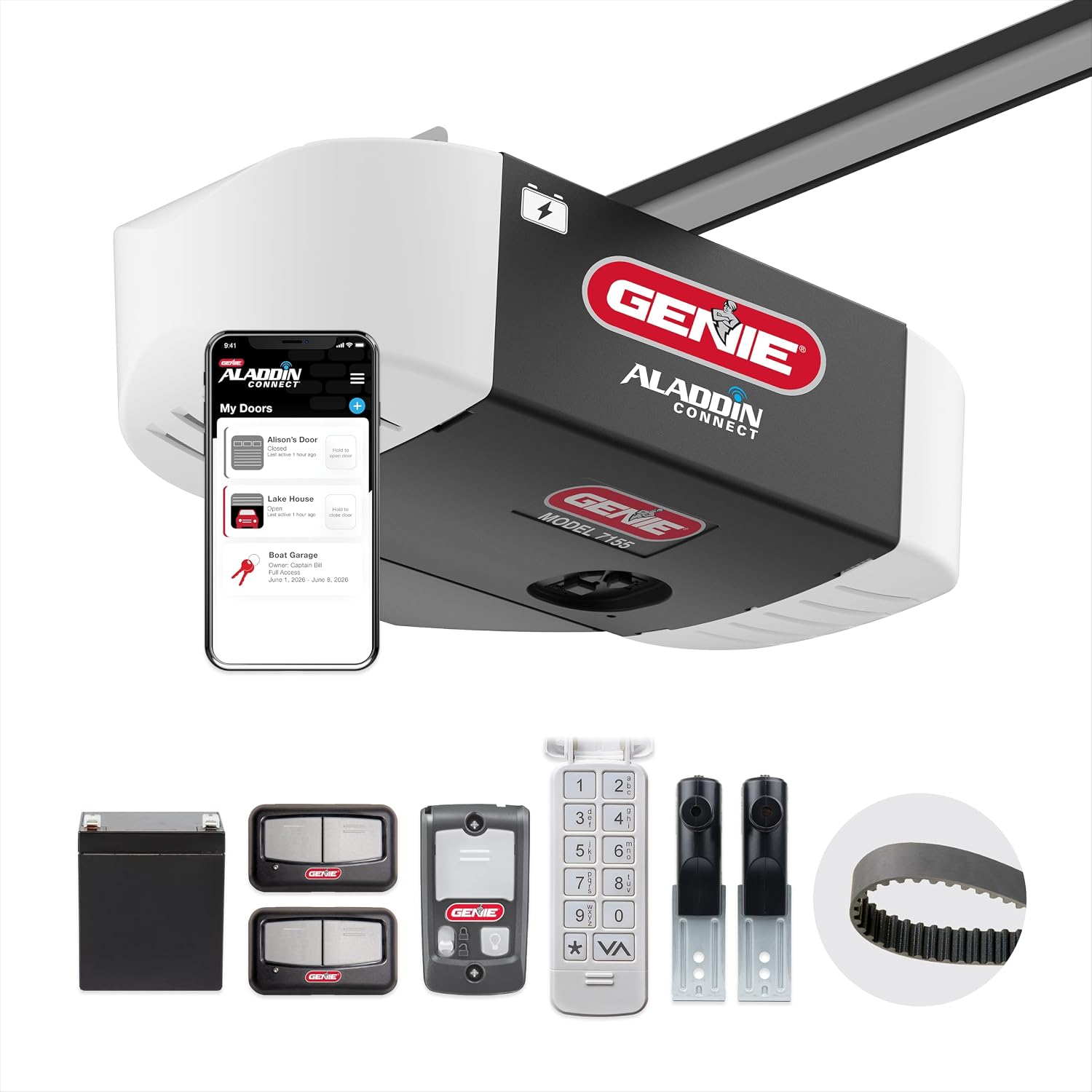
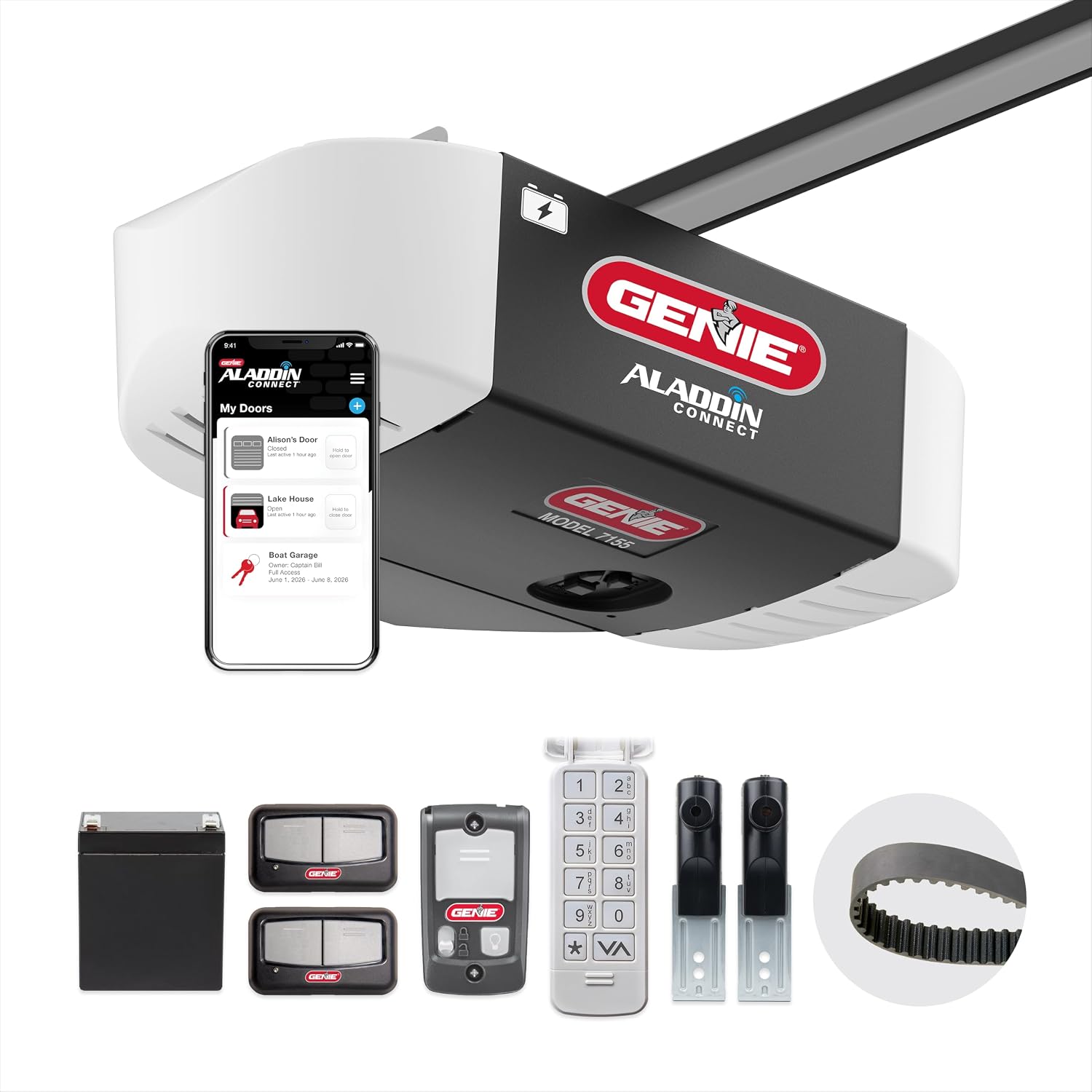
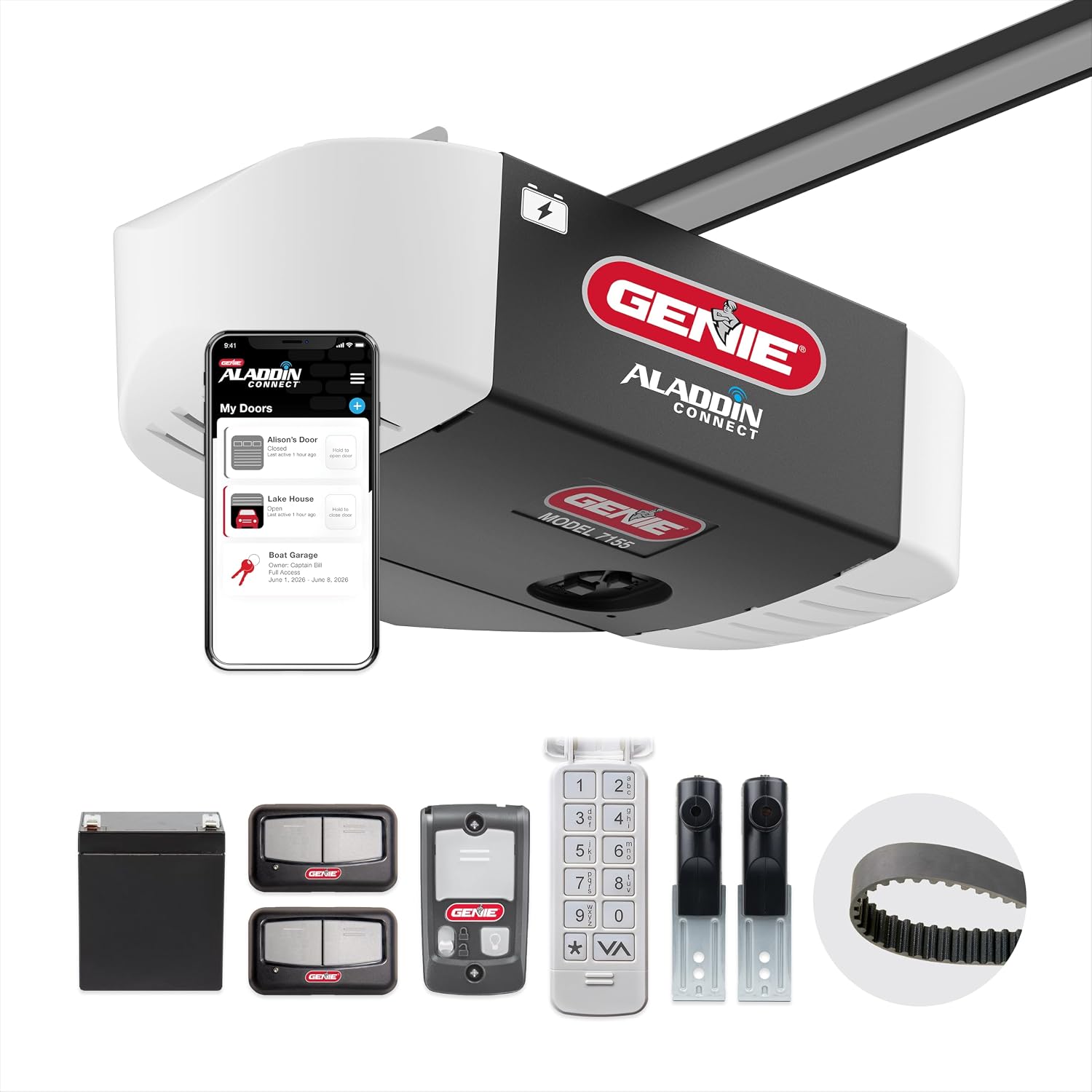
This is the one I’d put in my own house, and my bedroom is directly above my attached garage. The StealthDrive 7155 is a belt drive with a DC motor, and it is genuinely quiet. Not “quieter than the old one” quiet.
Visit on Amazon →
This is the one I’d put in my own house, and my bedroom is directly above my attached garage. The StealthDrive 7155 is a belt drive with a DC motor, and it is genuinely quiet. Not “quieter than the old one” quiet.
Quiet enough that I’ve had clients ask me if I actually installed the motor yet while the door was opening behind them.
The belt is reinforced steel, and the DC motor ramps up and down smoothly instead of jerking the door like an AC motor does.
The sensors are the best I’ve ever handled. They’re solid, well-designed, and they don’t blind in direct sunlight. One buyer with four kids and a dog said, “solid is good,” and I know exactly what they meant.
Flimsy sensors are the #1 source of nuisance calls I get, and I haven’t had a single callback on a StealthDrive install.
The color-coded parts make the install a genuinely pleasant experience, which is rare. The app works, it integrates with Google Home and Alexa, and the battery backup means you’re not stuck when the power goes out.
At ~$300, it’s not the cheapest option, but it’s the one with zero one-star reviews in my data. That’s a pattern I trust.
Flaws but not dealbreakers: The app requires an account, and if the cloud service ever goes under, you lose the remote access. The door still works with the wall button and remotes, so it’s an inconvenience, not a failure. If you’re a privacy nut, you can skip the WiFi setup entirely and it works like a normal opener.
If you have a bedroom above the garage and you want to sleep through a 2 AM arrival, this is the one.
Runner-up: Genie QuietLift Connect
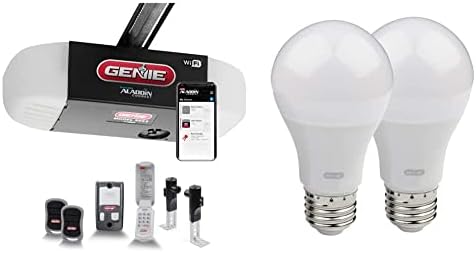
The QuietLift is the StealthDrive’s slightly less expensive sibling, and it’s a solid belt-drive option if you want to save ~$50. It’s quiet, though not as whisper-quiet as the StealthDrive, and it comes with the same solid sensor design. The install is straightforward, and the WiFi app works reliably. The DC motor is smooth, and the LED lighting is bright enough to light up a two-car garage.
The difference is the battery backup. The QuietLift doesn’t have it. If you live in an area with frequent power outages, that’s a real consideration. I’ve had clients stuck with a door that won’t open during a storm, and it’s not a fun phone call to get.
The other difference is the belt. The StealthDrive’s belt is reinforced steel; the QuietLift’s is a standard belt that’s more susceptible to cold-weather stiffness.
In my shop, I’ve seen standard belts get brittle after a few harsh winters.
Flaws but not dealbreakers: No battery backup, and the belt is less robust. If you’re on a tight budget and you don’t lose power often, this is a fine pick. But for ~$50 more, I’d get the StealthDrive.
If you want a quiet belt drive but you don’t need the power-outage insurance, this is your unit.
Upgrade pick: Chamberlain Wall Mount
 Visit on Amazon →
 Visit on Amazon →
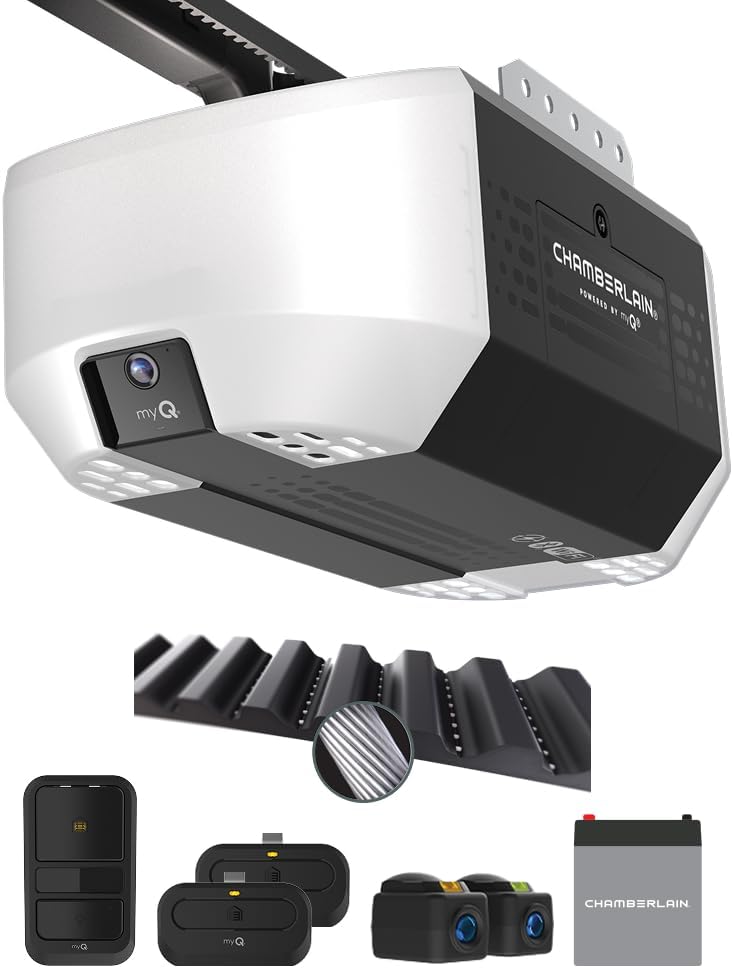
This one’s different. It mounts on the wall next to the door, not on the ceiling, which frees up all that overhead space. It’s dead silent because there’s no rail and no chain or belt rattling above your head. It’s also got a battery backup built in, which is a genuine feature. The motor is a DC unit that lifts the door directly via a torsion bar, and it’s smooth.
Visit on Amazon →
This one’s different. It mounts on the wall next to the door, not on the ceiling, which frees up all that overhead space. It’s dead silent because there’s no rail and no chain or belt rattling above your head. It’s also got a battery backup built in, which is a genuine feature. The motor is a DC unit that lifts the door directly via a torsion bar, and it’s smooth.
The catch is the price. It’s significantly more expensive than a ceiling-mounted unit, and it requires a torsion bar setup. If your door uses a standard extension spring system, you’ll need to convert it, which adds cost and complexity. It’s also not a DIY-friendly install for most homeowners. I’ve done a few, and they take longer and require more planning than a standard rail mount.
In the reviews, buyers consistently praise the quiet operation and the space savings, but a few note the install “takes longer than expected.” That matches my experience. One buyer with a 16-foot aluminum door said it handled the weight effortlessly, which is a testament to the DC motor’s torque.
Flaws but not dealbreakers: The price and the install complexity. If you have a standard torsion bar setup and you want the absolute quietest option with zero ceiling footprint, this is it. If you’re on a budget or you’re not comfortable with a more involved install, stick with the StealthDrive.
If you have a shop or a garage where ceiling space is precious and quiet is non-negotiable, this is worth the premium.
Budget pick: Genie Chain Drive 550
 Visit on Amazon →
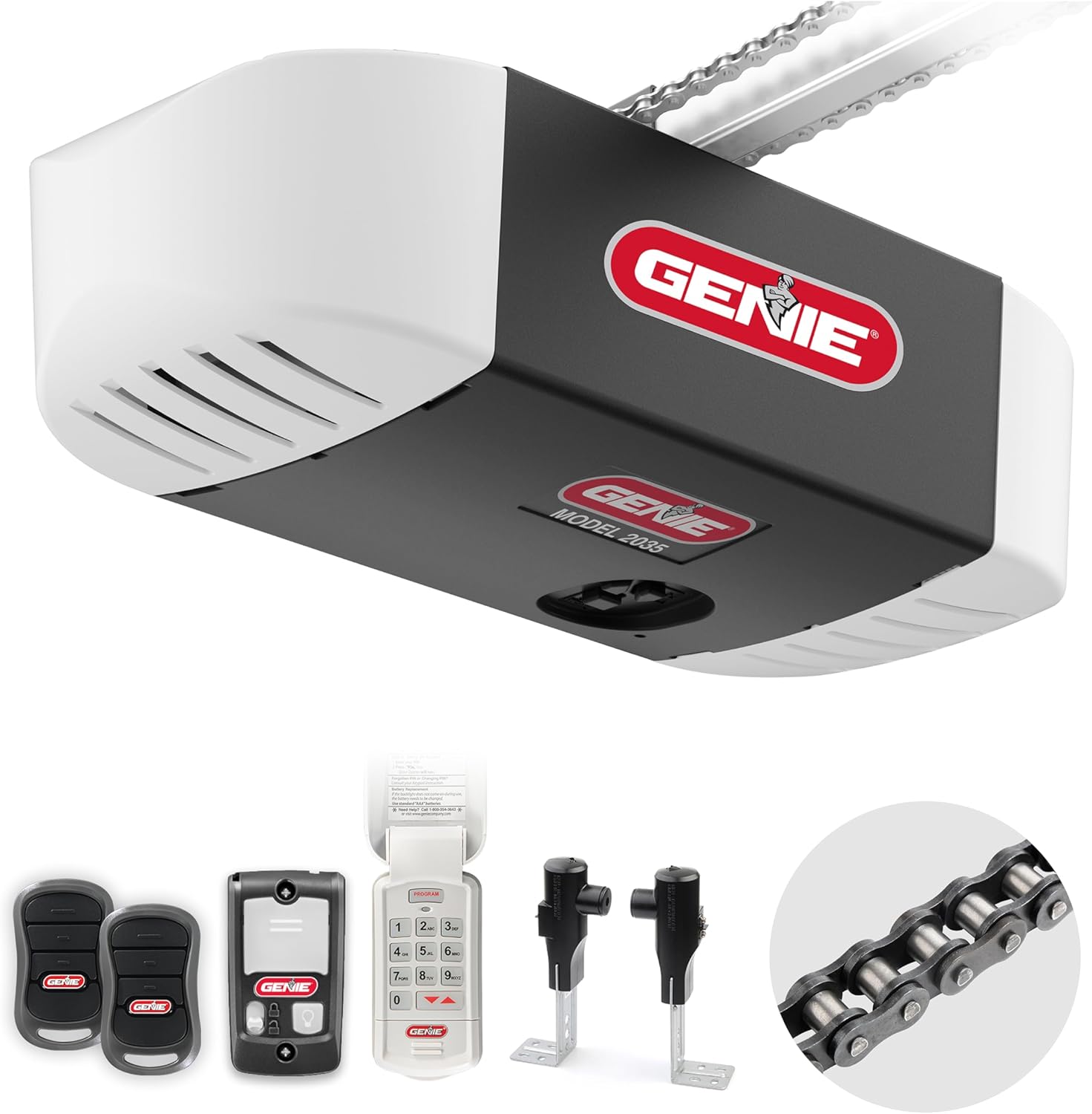
Let me be clear: a chain drive is not as quiet as a belt drive. Physics doesn’t care about marketing. But the Genie Chain Drive 550 is surprisingly quiet for a chain, and it’s the best value in this lineup at around ~$200. Buyers describe it as “whisper quiet,” which is high praise for a chain, and Genie has done some real dampening work on the rail.
Visit on Amazon →
Let me be clear: a chain drive is not as quiet as a belt drive. Physics doesn’t care about marketing. But the Genie Chain Drive 550 is surprisingly quiet for a chain, and it’s the best value in this lineup at around ~$200. Buyers describe it as “whisper quiet,” which is high praise for a chain, and Genie has done some real dampening work on the rail.
The included accessories are a genuine value: two remotes and a keypad. The keypad is a weak point, though. I’ve seen buyers report the battery draining almost weekly, and I’ve got three of them in my failed parts drawer tagged with the battery count. That’s a design flaw, and it’s the main reason this isn’t my pick for a bedroom above.
The install is easier than the belt drives, and the chain is more forgiving of misalignment. The manual is good, and the BILT app with 3D interactive instructions is genuinely useful. One buyer said the instructions were “amazing” and “very accurate,” which is rare praise.
Flaws but not dealbreakers: The keypad battery drain is real, and you should buy a spare keypad or plan to replace the battery monthly. The motor is AC, so it’s not as smooth as the DC motors on the belt drives. But if your garage is detached or you don’t care about the noise, this is a solid, reliable workhorse.
If you want to save money and you don’t have a bedroom above the garage, this is the smart buy.
The competition
The Genie GITR-3 remote is a replacement part, not a full opener, but it’s worth mentioning because it’s a study in why you should buy manufacturer parts. It programs in less than 15 seconds, and buyers praise the ease of setup compared to “pseudo-replacement openers.” But I’ve seen a documented pattern of button failures and early death.
One buyer’s remote died after 3 months while their original lasted 8 years. At ~$30, that’s ~$10 per month of working life.
My original remote cost me 31 cents a month over eight years. Test it immediately and return it if it’s defective.
The Chamberlain Belt Drive with Fixed Camera is an interesting concept, but the camera feels like a solution in search of a problem. It adds cost and complexity, and the video quality is mediocre. If you need a security camera, buy a separate one.
The Genie Wall Mount (B6172H) is a good unit, but it overlaps with the Chamberlain wall mount, and I’d only recommend it if you’re already in the Genie ecosystem.
The bottom line
If your bedroom is above the garage, get the StealthDrive 7155. It’s the quietest, the most reliable, and the battery backup is a real feature. If you’re on a budget and your garage is detached, the Chain Drive 550 is a solid value, but budget for a keypad battery replacement.
And if you’ve got the cash and the torsion bar setup, the Chamberlain wall mount is the ultimate in quiet and space savings.