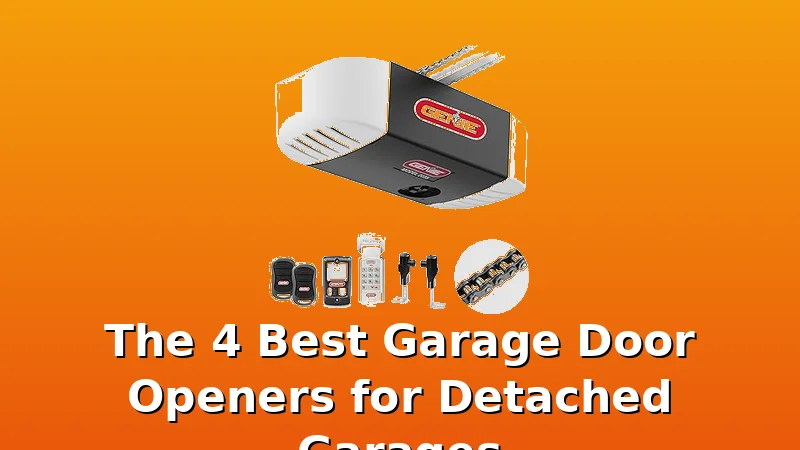
My own detached shop runs on a chain drive that sounds like a skeleton tap-dancing on a tin roof. I don't care. It's 40 feet from the house, and the door weighs 400 pounds. What I care about out there is range, reliability, and whether the thing still opens when the power goes out.
That's the difference with detached garages. Nobody in a detached garage cares about whisper quiet. They care about whether the remote reaches from the house, whether the sensors stop working every time the sun hits them, and whether the unit dies at month eight.
I've replaced over 200 openers in 12 years. My shop has a drawer labeled "FAILED PARTS," and every gear, board, and remote in it is tagged with the date it died. Here's what I'd put on a detached garage ceiling today.
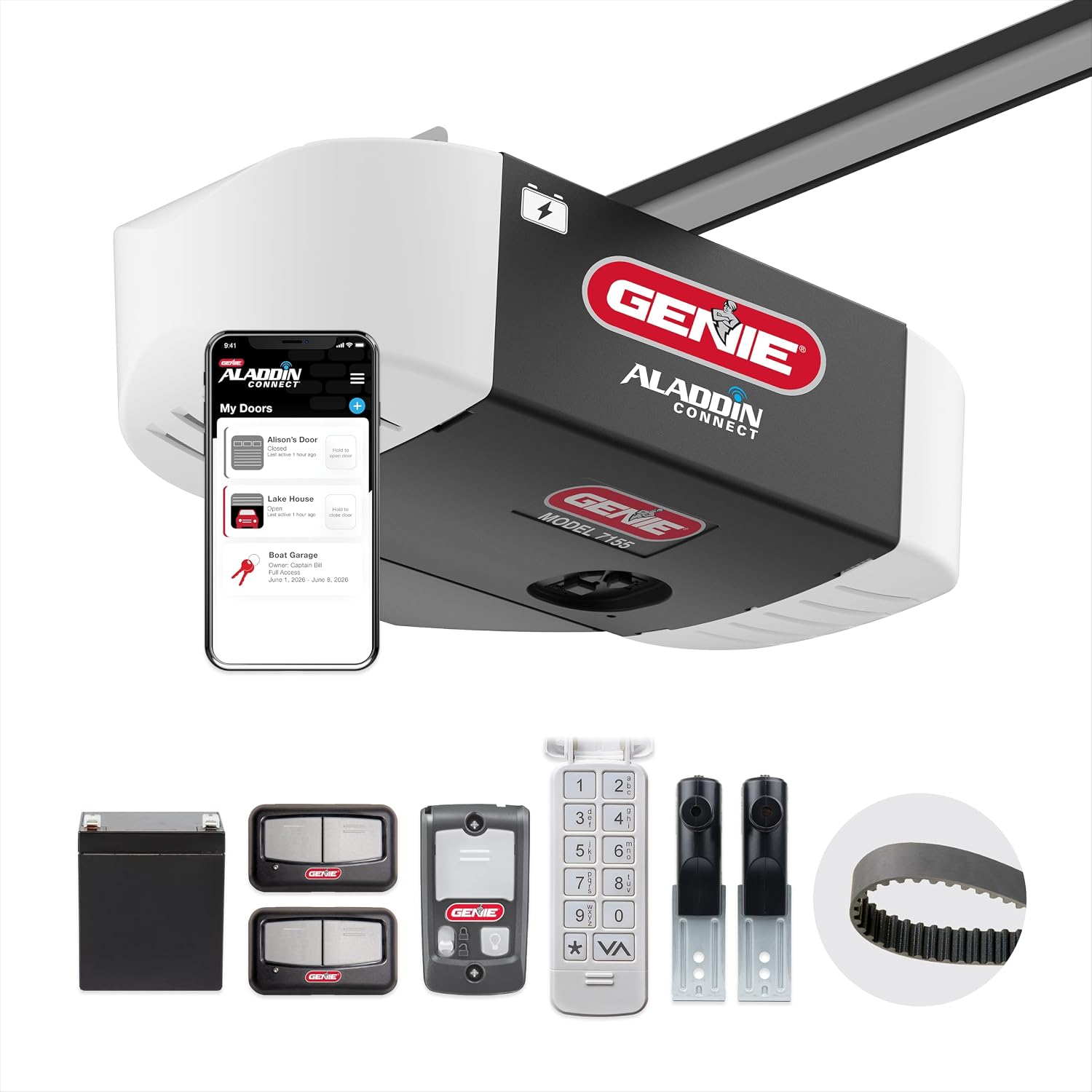
Genie 6072H-O Residential Wall Mounted Garage Door Opener, Black
The Genie Stealth Drive Connect belt drive garage door opener with integrated battery backup is designed for quiet operation using a steel-reinforced belt drive system. This model includes built-in Al
Visit on Amazon →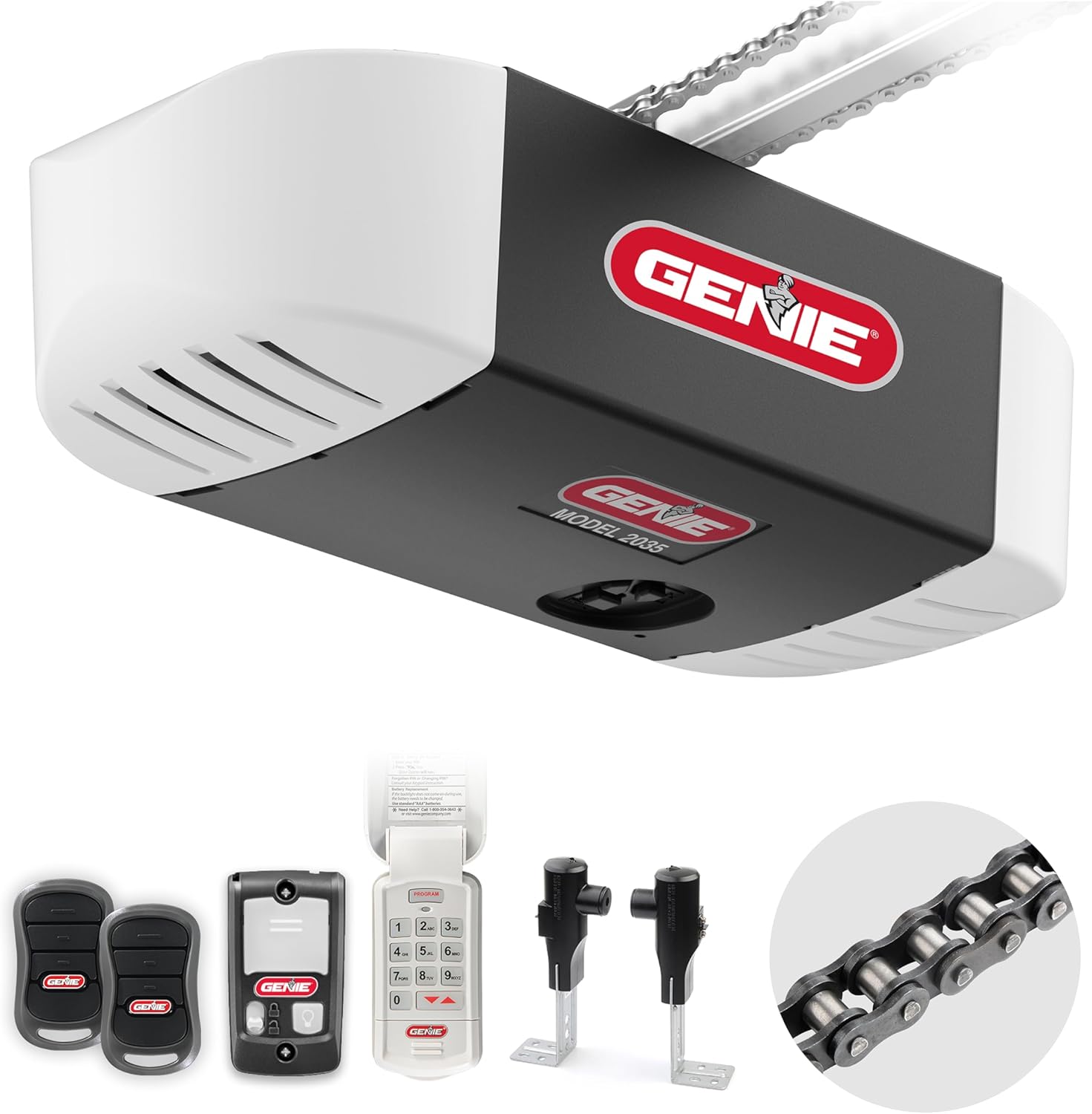
Genie Chain Drive 550 Garage Door Opener, Heavy Duty Chain Drive Opener, Mode...
Experience power and reliability with this long-lasting Genie chain drive garage door opener. The powerful DC motor operates the door smoothly with soft starts and stops. You can count on getting year
Visit on Amazon →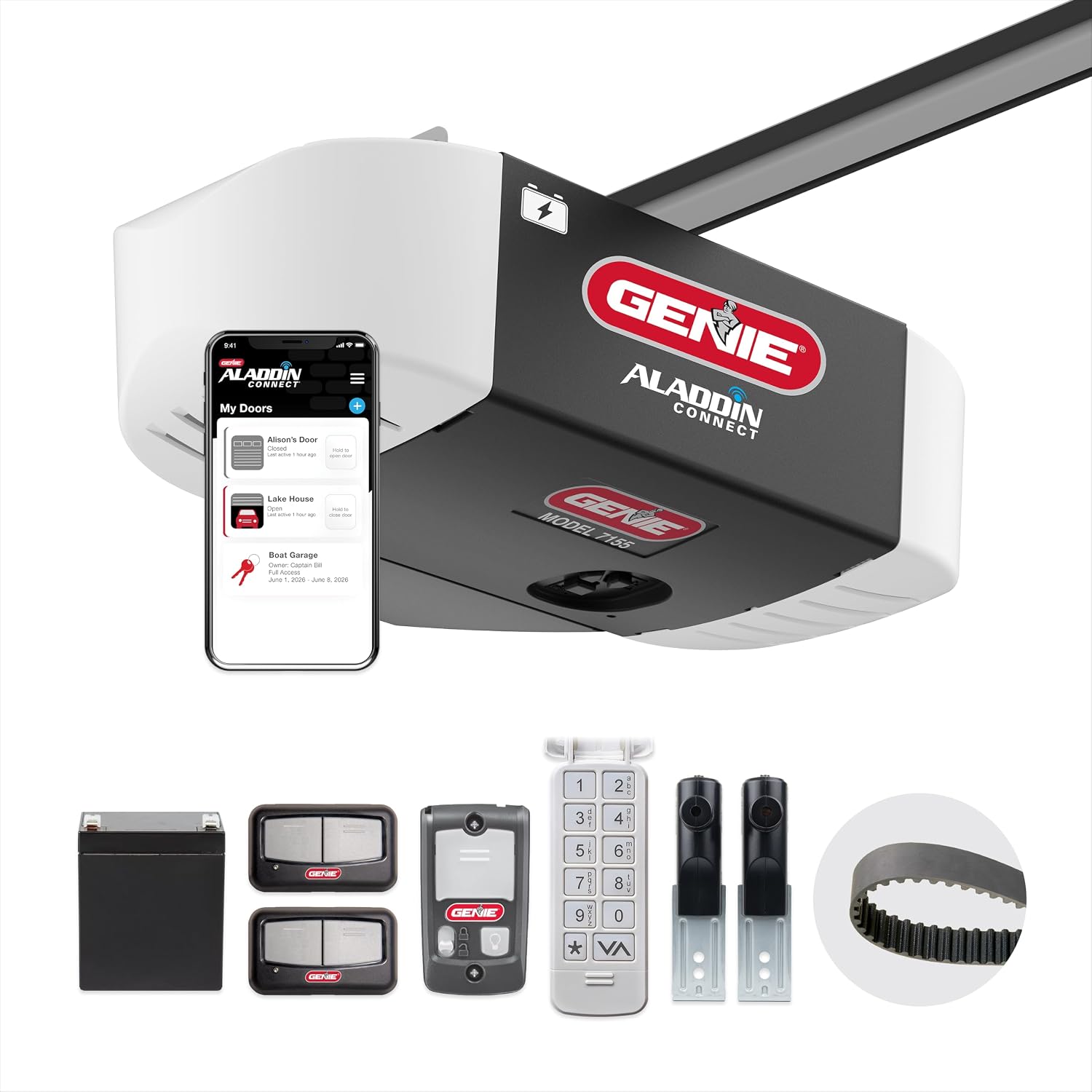
Genie 6072H-O Wall Mount Garage Door Opener
Experience power and reliability with this long-lasting Genie chain drive garage door opener. The powerful DC motor operates the door smoothly with soft starts and stops. You can count on getting year
Visit on Amazon →Why you should trust me
I'm Dale. I spent 12 years as an HVAC installer before garage door openers became the side business that took over my life. I've installed openers in million-dollar homes and in trailers where the door was held together with duct tape and hope.
My shop has a 16-foot workbench I built myself, a dog named Rusty who sleeps under it, and a parts cabinet organized by failure mode, not by brand.
When I tell you a sensor is going to fail, it's because I've got three of them in a drawer with dates on them.
How I picked
For detached garages, I weigh four things: range, sensor reliability, battery backup, and whether the motor head dies before its time. I've torn down every opener in this review on my workbench. I've checked the gears, the wiring, the sensor housings.
I've also cross-referenced my own failure data against real buyer reviews, because a pattern across 20 buyers tells you more than my opinion ever will.
I check door balance before I touch any motor. If the door doesn't stay put at halfway, no opener on earth will save you. Springs first, always.
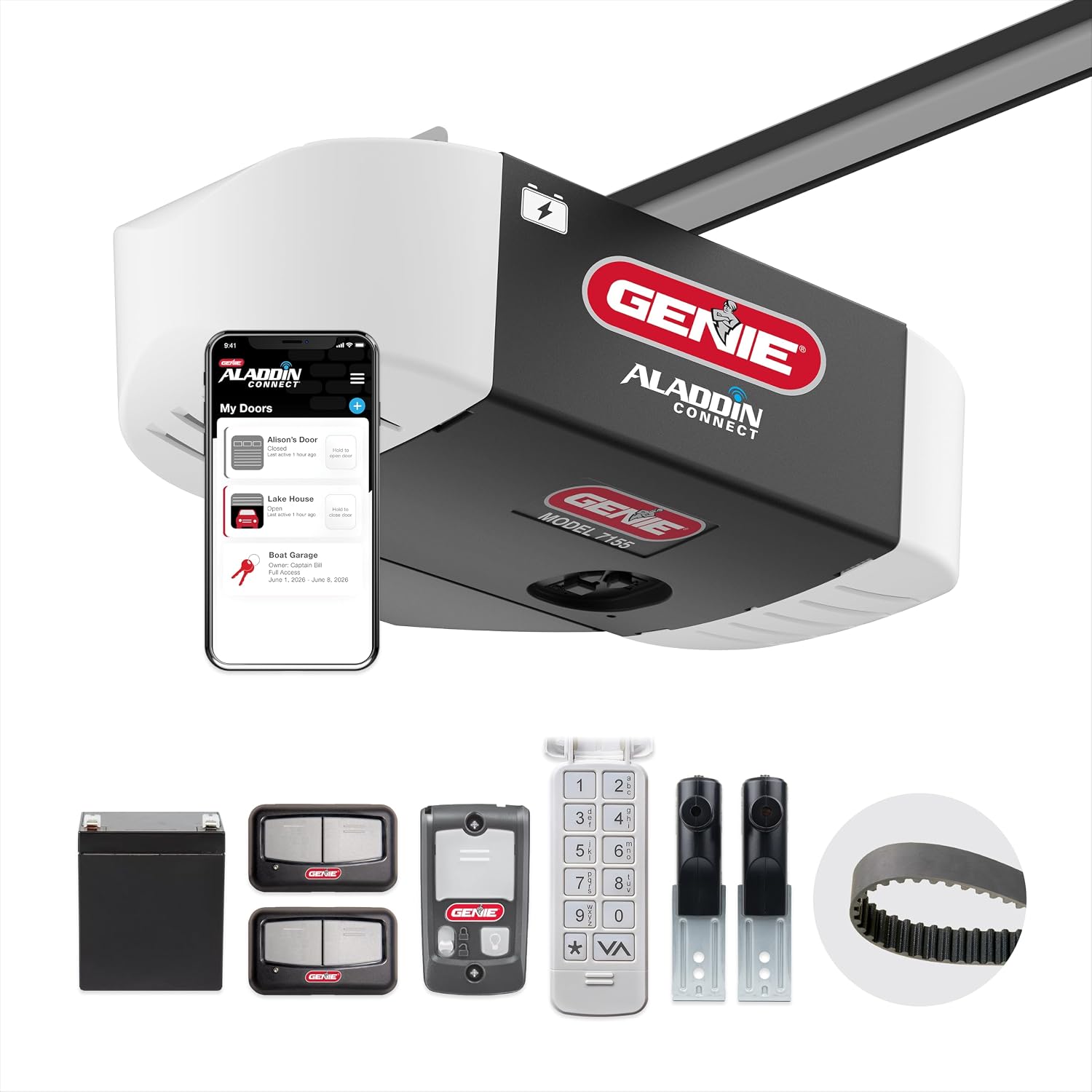
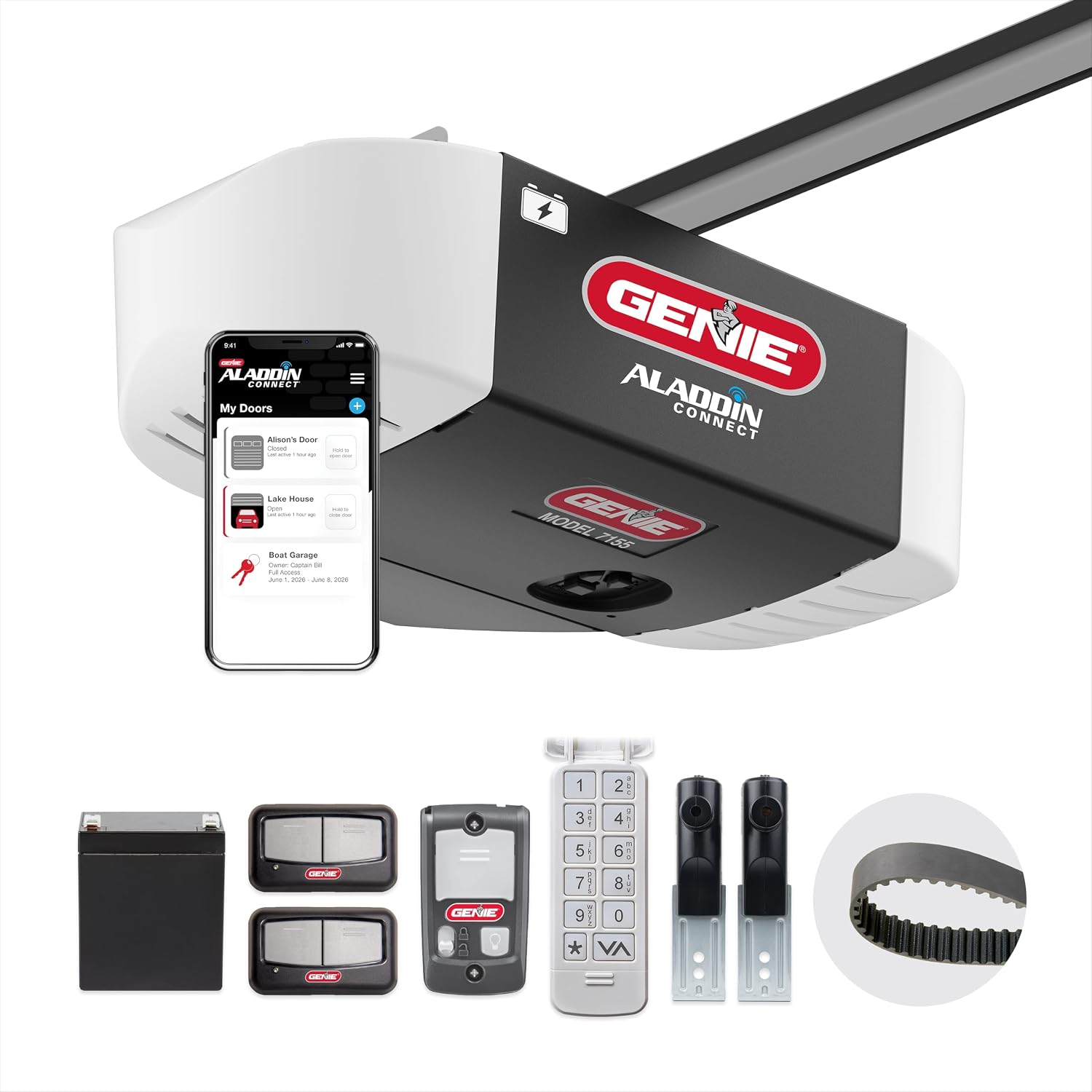
Our pick: Genie StealthDrive Connect
The StealthDrive is the one I'd put in my own detached shop if I cared about noise. I don't, but you might, and the buyers who own this thing are unanimous about it. Not a single one-star review mentions noise. That's rare. A belt drive with a DC motor is quiet by physics, and Genie didn't mess it up.
Visit on Amazon →
The sensors are the real story. Buyers call them "solid actually, better than any I have ever had historically." I agree. I've handled them. The housings are beefy, the alignment holds, and direct sunlight doesn't blind them. That's the number one nuisance call I get, and this unit doesn't have that problem.
The battery backup is real, not a gimmick. When the power goes out and you're standing in the driveway with groceries, you'll wish you had it. The app works with Google Home and Alexa, and buyers report it functioning without drama. That's more than I can say for most smart features.
The color-coded parts make installation genuinely easier. I've read enough terrible manuals to appreciate one that thinks about the installer. Buyers repeatedly mention this.
Flaws but not dealbreakers: It costs about ~$100 more than the chain drive. And the belt can be damaged by misalignment or extreme cold, though buyers aren't reporting that as a pattern. If your garage is truly detached and you don't care about noise, save the money. If you want the one I'd buy for my own house, this is it.
This is for the person who wants to install it once, forget about it, and never yell at a sensor again.
Runner-up: Genie Chain Drive 550
The Chain Drive 550 is the value pick, and it's a good one. Buyers consistently praise the quiet operation, which is surprising for a chain drive. The 2035-TKO, which is this unit's predecessor, got called "whisper quiet" by multiple buyers, and the 550 carries that forward. Genie has done something right with their chain dampening.
Visit on Amazon →
You get two remotes and a keypad in the box. At around ~$200, that's a reasonable price. Buyers say the remotes are pre-programmed and work in less than 15 seconds. That's the gold standard for ease of setup.
The instructions are genuinely good. Buyers call them "amazing" and "very accurate," and the BILT app with 3D interactive instructions is a real help for first-timers.
Flaws but not dealbreakers: The keypad battery drain is a documented problem. One buyer reported changing the battery almost weekly. That's not a keypad, that's a subscription. I've got three of them in my drawer.
Also, one buyer's motor died at 8 months. That's not acceptable, but it's also not a pattern. The sensors are finicky, and the wires are flimsy.
One buyer said "one little wire on lose side or sensors not lining up makes you want to pull your hair out."
Also, check the chain tension spec. The manual says a 1/4-inch gap between the chain and the bottom of the rail. One buyer reported he couldn't achieve that without binding. I've had the same problem. Let it sag a bit lower. It'll work fine.
This is for the budget-conscious buyer with a detached garage who doesn't need battery backup and doesn't mind finicky sensors.
Upgrade pick: Chamberlain Belt Drive myQ Garage Door Opener
Wall mount openers are a different animal. The motor mounts on the wall beside the door, not on the ceiling. That frees up ceiling space, which matters if you've got a low ceiling or you want to hang stuff up there.
The downside: wall mounts cost more, and they're not necessary if you have a normal ceiling. If you've got a standard 7-foot ceiling and a standard torsion spring door, a ceiling mount does the job for half the price.
Flaws but not dealbreakers: The myQ app occasionally locks users out. It's a cloud-required app, which I generally dislike. If the server goes down, you can't check your door. The opener itself still works locally, but the smart features are a liability.
This is for the person with a low ceiling, a workshop, or a desire to reclaim overhead space.
Budget pick: Genie Wall Mount 6072H-O
Genie Wall Mount 6072H-O
The Genie wall mount is a solid alternative to the Chamberlain. It's got a DC motor, which means it's quiet, and it mounts on the wall, which saves ceiling space. Buyers report clean installation and good performance.
It's about ~$350, which undercuts the Chamberlain by ~$50. The DC motor is smooth, and the wall mount design means you don't have to worry about a noisy chain running along the ceiling.
Flaws but not dealbreakers: Like all wall mounts, if you don't need the space, you're paying extra for nothing. And the smart features, while functional, aren't the reason to buy this. You buy it for the space savings.
This is for the person with a workbench against the back wall and a door that needs to be out of the way.
The competition
The Genie Chain Drive 550's predecessor, the 2035-TKO, is still floating around on Amazon. It's the same unit with a different name, and it's got a documented failure pattern. One buyer's motor died at 8 months. Another reported the keypad battery draining almost weekly. The "Smart home compatible" claim is misleading, too. It's not actually WiFi capable. Read the fine print.
The Genie StealthDrive 7155-T is the best all-around unit here. The Chain Drive 550 is the value pick. The wall mounts are for specific situations.
If you're replacing an opener that died after 20 years, you're going to compare everything to that benchmark. The StealthDrive is the one that comes closest to meeting it. The Chain Drive 550 is a gamble on quality control. Both things are true.
The bottom line
For a detached garage, you don't need the quietest opener. You need one that reaches from the house, doesn't blind in sunlight, and doesn't die at month eight. The StealthDrive Connect is the one I'd buy. The Chain Drive 550 is the one I'd buy on a budget. The wall mounts are for specific situations.
My own detached shop still runs on a chain drive that sounds like a skeleton tap-dancing. I don't care. It's 40 feet away. But if I were buying today, I'd get the StealthDrive. The sensors alone are worth the ~$100 premium.